
Are your bounce rates giving kangaroo rather than bunny? Perhaps your competitors are consistently undercutting you with more powerful keywords? Maybe you’re just fed up with the tedium of crunching the numbers, if so you need to invest in the right tools.
With the best PPC tools in your corner, you may well find that bidding becomes punchier, tracking more accurate, and your time is better spent, helping your budget go miles further.
And this isn’t all hot air, either – studies show that marketers who adopt automation and AI tools outperform those who don’t by 30% ROI, and if you’re in the latter camp, you’re trailing behind 80% of the competition.
Besides the data, though, I’ve more than dabbled with these tools personally. In this top 8 list, I’ve compiled the ones Vital to our PPC work with clients, ensuring there’s something for everyone regardless of experience or budget. Let’s dive on in.
Skip to:
- What Makes the Best PPC Tool?
- The Benefits of Harnessing PPC Tools, Software & Automation
- The Shortlist: 8 Best PPC Tools for Freelancers, Small Biz & Enterprises
- A Deep Dive Into Our Recommendations
- Honourable Mentions
- Conclusion: Is the Learning Curve for Me?
- FAQs
What Makes the Best PPC Tool?
PPC tools come in all shapes and sizes, and in the veritable PPC toolkit I’ve got in store, that’s no exception. Some are there to support the creation of creatives (think: using ChatGPT to buff and polish the ad copy you wrote so it fits within the word count); others are designed to grease up the bottlenecks in your general workflow management by automating the grunt tasks.
Some, like Semrush, serve as a PPC Swiss army knife with a mix of all the essentials: keyword and competitor research, campaign planning, analytics and reporting, paid search position tracking and ad optimisation features. Then, there’s lead tracking software to ensure the blind spots posed by VPNs and cookie blocks don’t have you marketing in the dark. Phew – that’s a lot!
In my mind, a quality PPC tool – no matter its primary use – has got to be intuitive for the user, able to handle heaps of data without buffering or taking years to load (yawn), plus provide accurate, reliable insights that translate into tangible results. Bonus points if they integrate smoothly with all the popular platforms.
Of course, not all PPC tools are made equal; high subscription costs and mountainous learning curves are real barriers, as are limited capabilities. This is why, in my shortlist, I’ve accounted for the needs of both solopreneurs and SMEs, offering a mix of the best all-in-one, free and user-friendly PPC tools.
The Benefits of Harnessing PPC Tools, Software & Automation
So, you’re up to speed about what the most popular PPC tools do – handling the bidding, budgeting and campaign adjustments without full human oversight and lending a hand with the analytics – but what are the benefits? Well, allow me to share a handful for you to chew on:
- It’s time-efficient, collectively saving you hours every week by taking the reins of laborious manual tasks
- It sets you up for more precise targeting – in fact, 37% of marketers said that leads are more informed thanks to AI-powered tools in HubSpot’s flagship State of Marketing Report for 2026
- It helps you shine a light on your blind spots, connecting the full (let’s be real, messy) customer journey across devices and platforms, so you can attribute those clicks accurately
- It picks up errors the human eye might struggle to see, awash with thousands of data points
- It’s great for scaling, especially when you’re juggling multiple campaigns
- It leads to improved overall performance
- Better performance = better ROI
The Shortlist: 8 Best PPC Tools for Freelancers, Small Biz & Enterprises
Cue the drumroll, lift the curtains – here’s our list of the best PPC tools, picked by yours truly.
- Google Ads tool suite – best for advertisers running Google campaigns who want free, native tools to build, optimise, and scale PPC campaigns.
- WhatConverts – best for lead gen businesses that need detailed call, form, and chat tracking to identify which PPC campaigns are generating real leads.
- Semrush – best for marketers and agencies that want an all-in-one platform for PPC research, keyword analysis, competitor insights, and campaign planning.
- Optmyzr – best for advertisers who want to analyse competitors’ PPC strategies, keywords, and ad history to inform their own campaigns.
- Cometly – best for performance marketers who want advanced attribution and real-time tracking to understand exactly which ads and campaigns drive conversions and revenue.
- SpyFu – best entry-level option for advertisers who want an affordable PPC tool to analyse competitor strategies, keywords, and ad history to inform their own campaigns.
- Plausible – best for privacy-focused marketers who want a lightweight, GDPR-friendly analytics tool to measure website traffic and campaign performance.
- Adthena – best AI-powered for enterprise brands looking to unveil hidden competitor data.
A Deep Dive Into Our Recommendations
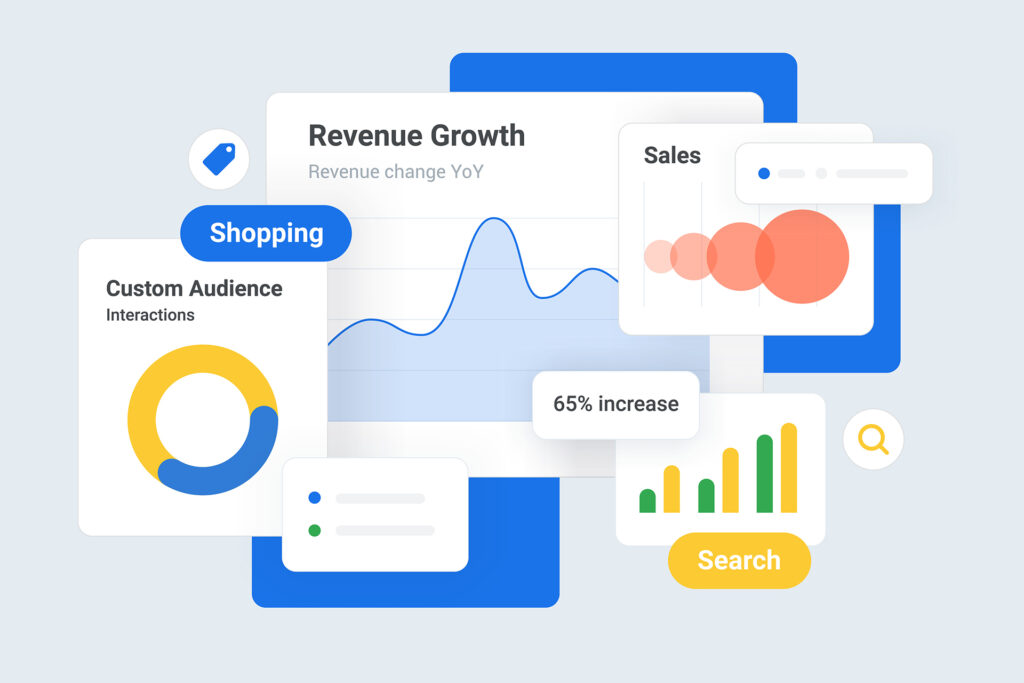
1. The Google Ads Tool Suite
At the top of my list for the best PPC tools for 2026 is Google’s very own offering: the Google Ads tool library, complete with 13 handy utilities we’ve personally tried and tested. The essentials include…
- Insights Finder for discovering users’ interests, looking at search and YouTube trends, unlocking new segments, and, ultimately, getting to know your audience better
- Recommendations for analysing your account’s performance history, getting tailored suggestions to wring more out of your budget and automating parts of the process
- The Google Ads Mobile App, which allows you to take your campaign management out and about
- Keyword Planner for campaign research, new keyword discovery and forecasting performance
- Google Analytics for analysing website and app performance, unlocking crucial visitor insights
- Tag Manager– our conversion tracking buddy, designed to bring clarity to customer journeys and conversion paths
- Performance Max– Google’s AI-fuelled bidding automation tool that lets advertisers access all of their Google Ads inventory from a single campaign
- Demand Gen, another AI-powered campaign tool, for advertisers seeking to serve visually-appealing, multi-format ads across YouTube (incl. Shorts), Discover, and Gmail.
Not only are these built-in tools free, but because they come from the big G itself, they’re reliable, trustworthy and can tap directly into the search engine’s data pools. So, if you’re not sure where to start, or how much of your budget to allocate to PPC resources, I’d recommend these as your first port of call.
Great for: Those just starting out or lean teams on smaller budgets
Price: Free!
Pros:
- Did I say they’re free?
- Google’s tool ecosystem covers all bases for PPC beginners
- There’s a vast pool of online resources for upskilling
- Great community userbase support
- Seamless integration into Google Ads
Cons:
- Learning curve varies between tools
- Third-party tools can often provide superior insights
- Less scalable than other tools
- Limited in terms of creative support (e.g., refining imagery & ad copy)
2. WhatConverts
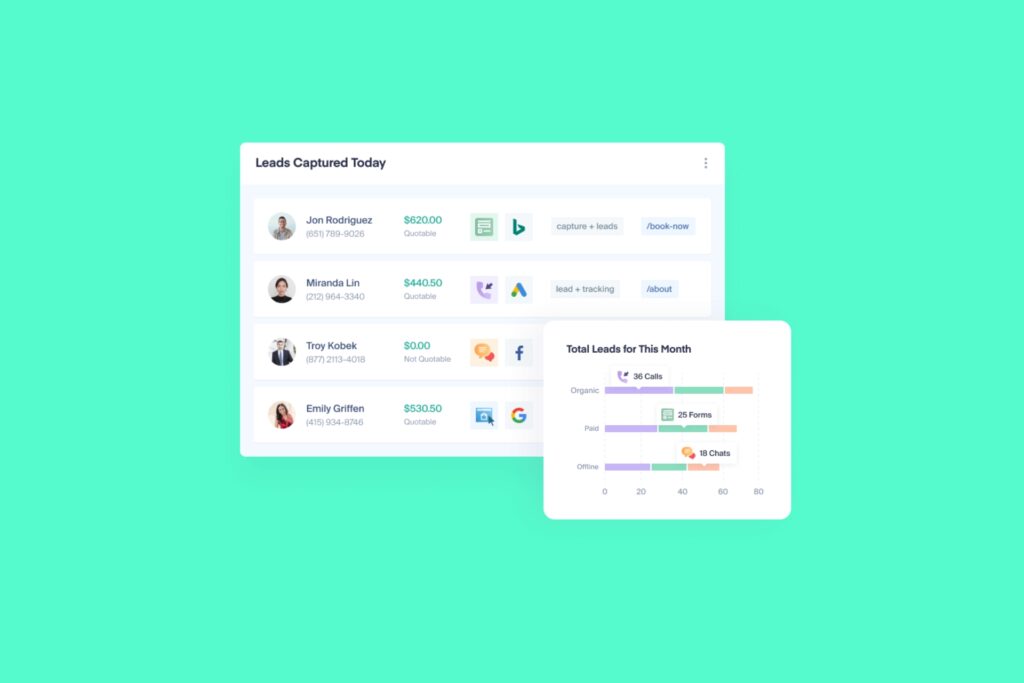
WhatConverts is a rising star in the paid search world; adopters of the software (myself included) can’t hold back the praise. Built primarily to capture, manage, and analyse marketing leads from calls, forms, chats and transactions, this lead tracking and reporting platform is the best PPC software for B2B, SaaS and professional service providers.
In my book, its standout feature is its powerful attribution capabilities. Essentially, it gives you end-to-end visibility of every customer journey – from ad clicks and website visits to CRM visits and even LLMs like ChatGPT.
With these richer insights, you’ll glean everything you need to know about your audience, pinpoint the real drivers behind your revenue, and be able to send nourishing, conversion-ready data back to your ad platform of choice. Together, that’s a recipe for better attribution, smarter marketing and stronger conversions.
Great for: Agencies and marketing teams managing multiple campaigns that need a more comprehensive attribution and tracking, and more powerful reporting.
Price: Starts at £45/month for all the essential features for individual businesses
Pros:
- Accurate conversion data via server-side tracking (despite iOS limitations and browser restrictions)
- Multi-touch attribution
- Real-time analytics reporting
- Great A/B testing potential
Cons:
- More complex than some other tools
- Not as suited to solopreneurs or businesses with fewer campaigns
3. Semrush
Semrush is undoubtedly the Goliath of search engine marketing, prized among digital agencies for its extensive suite of features. Their milestone of 10M users speaks for itself!
While it offers robust AI recommendations for campaign optimisation, its niche is competitor analysis, with advanced tools for snooping on competitors’ ads, keywords and historical strategies.
We currently use it for keyword research purposes, navigating over to the Keyword Magic Tool to add new high-value terms and phrases into our client targeting rosters and keep on top of reporting. Since we also subscribe to Semrush’s SEO tools, it’s a great way to make our money go further and synergise our SEM activities. Two birds one stone, anyone?
But that’s not all: Semrush also grants its users the ability to generate ad creatives, saving hours toiling away on Canva, Photoshop, or another image editing software. While I would strongly encourage you against using automatically created assets, it’s a simple way to polish up what you’ve already created and feel happier with it.
Best for: Larger marketing teams, agencies and enterprise brands with extensive campaign needs
Price: Base advertising plan starts at around £75/month and Pro at around £165/month
Pros:
- A true all-rounder tool suite
- Data-rich insights
- It really excels in competitor analysis
Cons:
- Expensive for solopreneurs and small business
- Steeper learning curve
- Focuses primarily on Google
4. Optmyzr
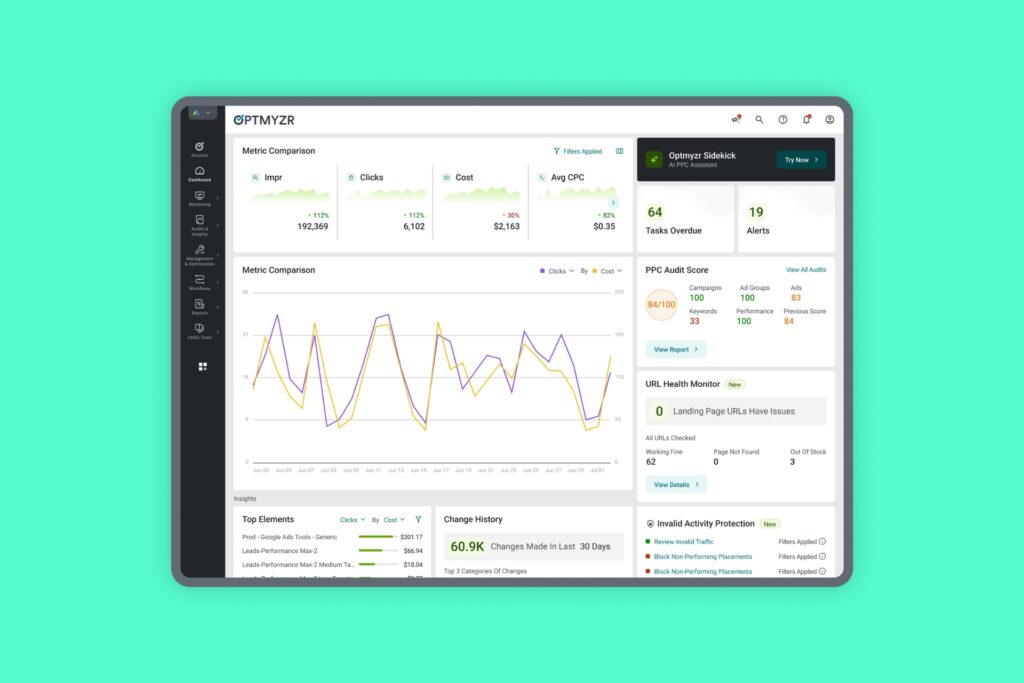
Optmyzr is one of the more expensive PPC tools on my list, but if you use it frequently, its value pays for itself. Providing powerful, high-end PPC management, it sets out to automate complex Google and Microsoft Ad tasks – think: bid adjustments, keyword management and reporting – recouping tons of labour that’s better spent on the analysis side of things.
It’s also got glowing reviews; users frequently praise its user-friendly interface – notably its handy dashboard, which gives you an immediate snapshot of performance – and the detail it brings to reporting.
Best for: Those seeking a fully comprehensive PPC tool for multiple campaigns and accelerate productivity
Price: Full kit of essentials starts at around £180/month for 25 accounts
Pros:
- Free 14-day trial
- Powerful time-saving automation
- Detailed, clean analytics
- Strong customer support
Cons:
- Steeper learning curve
- Quite expensive for smaller brands
- Lacks support for Amazon and Meta Ads
5. Cometly
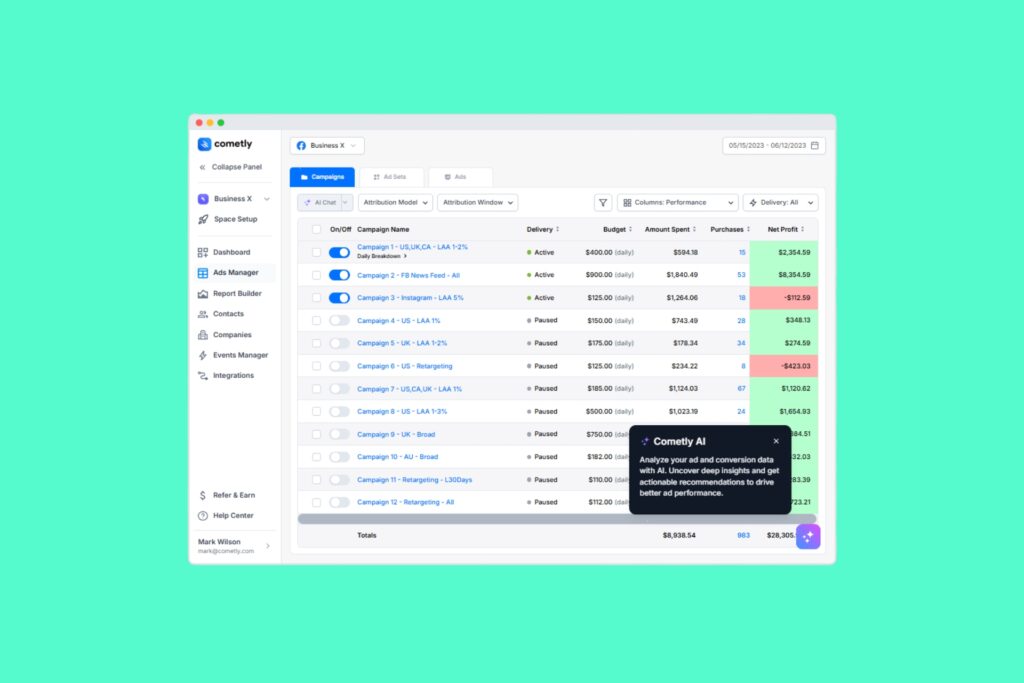
In the era of eCommerce, Cometly stands out as an exceptional tool for merchants, whether that’s for improving Shopping Ad targeting, refining retention marketing efforts or getting a grasp of where your ads are having the sharpest impact through your cross-channel advertising.
It’s user-friendly, it’s intuitive, it’s accurate and, best of all when you’re in a pickle, it has great customer service. Like WhatConverts, Cometly is a marketing attribution tool, complete with all the essentials: real-time insights into ad performance, server-side tracking, multi-touch attribution, and AI-powered ad management to optimise ROI.
Price: Custom pricing based on ad spend volume, but more affordable than similar tools
Pros:
- Accurate data and data attribution
- Tons of integrations
- User-friendly
Cons:
- Fairly steep learning curve
- Can be expensive for smaller businesses
- Focused on marketing attribution rather than campaign optimisation
6. SpyFu
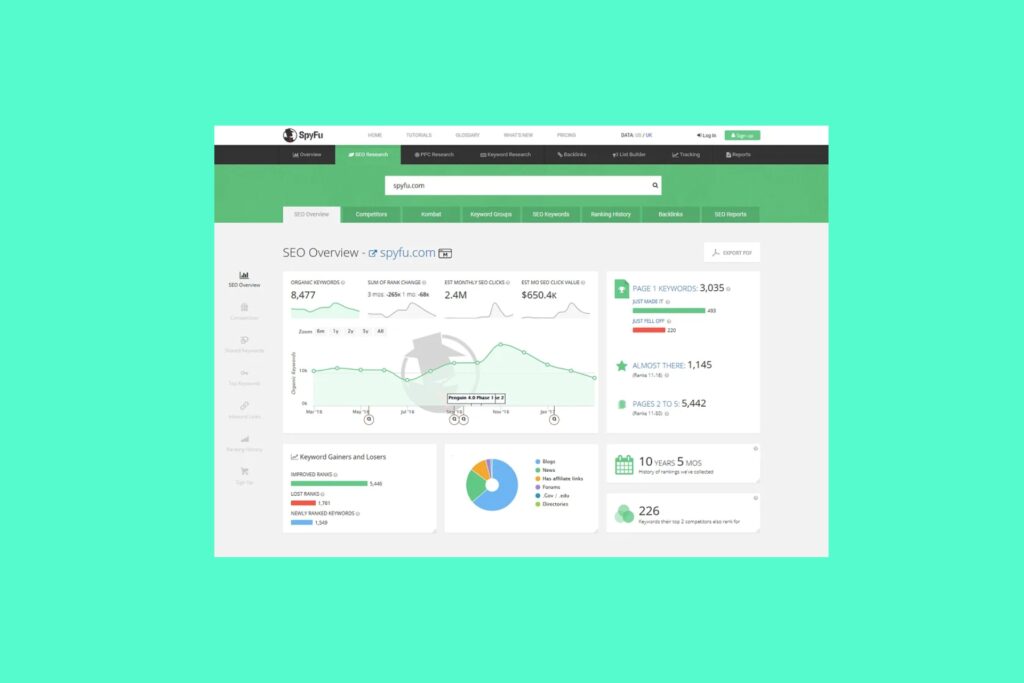
SpyFu has long been a go-to competitor intelligence tool for PPC marketers who want to see what the competition is up to without paying enterprise-level prices – and they make all the data surprisingly accessible.
Its biggest strength lies in historical PPC data. You can analyse competitors’ paid keywords, explore their ad copy archives, and identify gaps in your own strategy. For smaller businesses and freelancers especially, this kind of insight can be incredibly valuable in filling the hidden gaps in your strategy. While it doesn’t have the same breadth of features as tools like Semrush or Adthena, SpyFu is very straightforward and affordable too.
Price: Starting at£29/month for the basic plan
Pros:
- Great competitor keyword and ad history data
- Very affordable compared with other PPC research tools
- Easy to use and beginner-friendly
- Helpful keyword suggestions for campaign planning
Cons:
- Data accuracy isn’t always as deep as enterprise platforms
- Limited automation or campaign management features
- Primarily focused on competitor research
7. Plausible
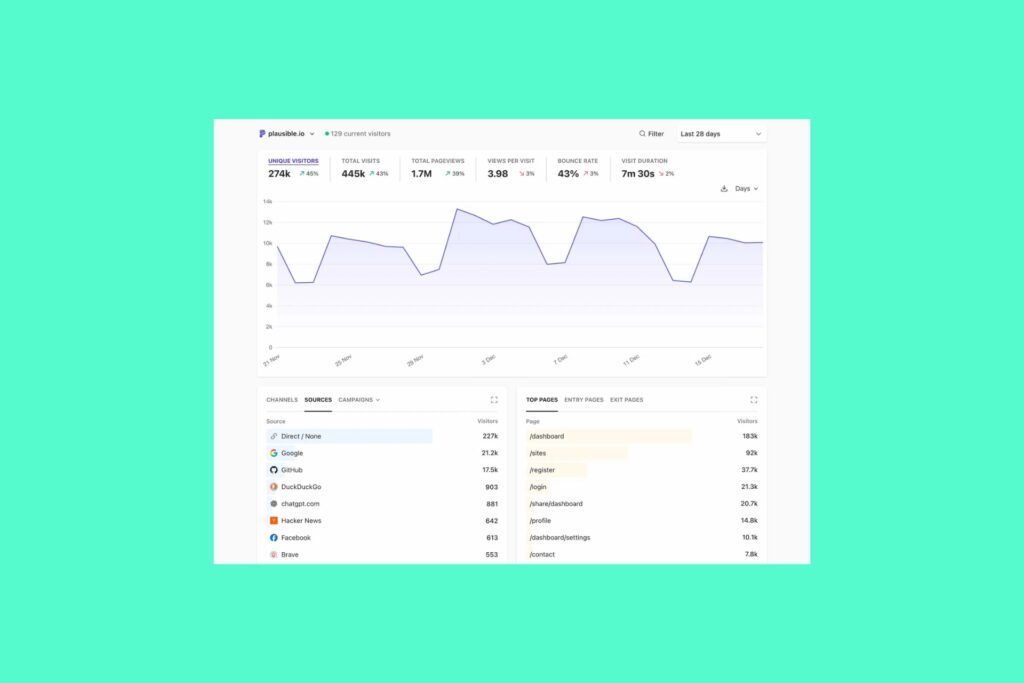
Plausible is one of the best PPC software options for marketers after a more GDPR-friendly alternative to Google Analytics, minus all the complexity. Its user interface is squeaky clean and uncluttered, providing a beginner-friendly analytics experience that cuts through the noise.
With a glance, you get a nice, aggregated view of all your sites in one handy dashboard, and you also don’t need to build custom reports, which cumulatively saves hours of work and hair-pulling.
Here, I’d start by importing your Google Analytics stats and connecting Plausible to your Google Search Console; this will give you a clear, accurate assessment of the impact of your paid ads and any other campaigns, making it worthwhile for your broader marketing endeavours, from SEO to email.
Best for: Newcomers toanalytics crunching who value a seamless experience and advanced data privacy
Price: Traffic-based plans starting from £9/month
Pros:
- 30-day free trial
- Lightweight scripts keep your website fast
- User-friendly for beginners
- Affordable compared to other similar tools
Cons:
- Less detailed than other marketing attribution software
- Focuses on attribution rather than campaign optimisation
- Lacks deep funnel analysis
8. Adthena
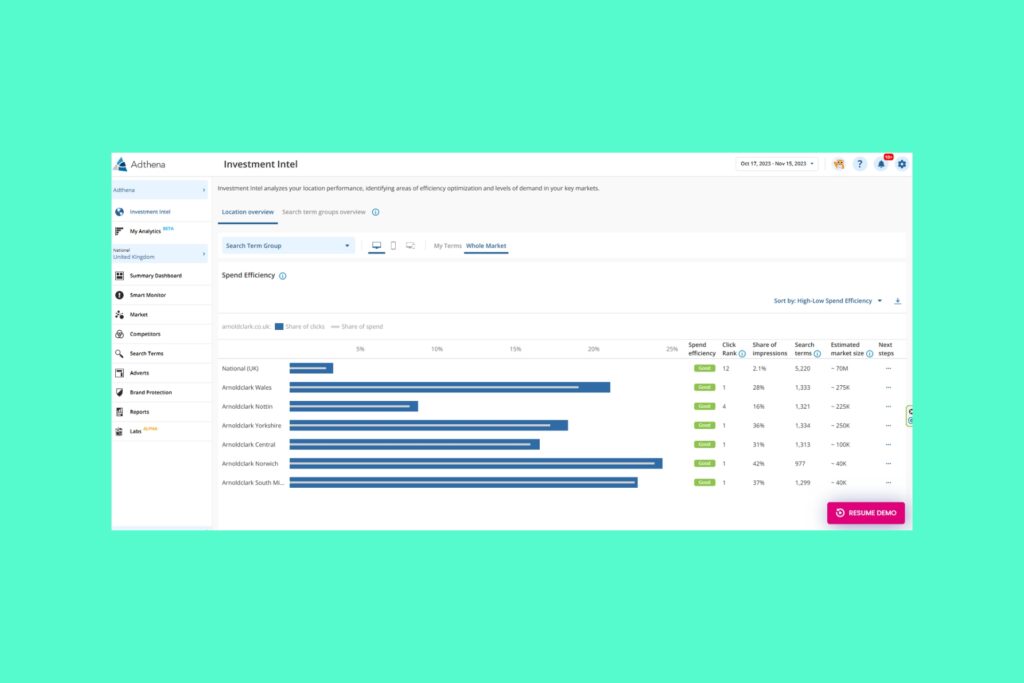
With some big brand-name clients under its belt (Vodafone, L&G and Sage to name a few), Adthena is a trusted option for those looking for a powerful search intelligence platform. Designed to uncover what competitors are doing in paid search and how you can outperform them, it brings something extra to the table.
Unlike simpler competitor tools, Adthena uses AI-driven analysis to map entire paid search markets. It shows which brands are bidding on which keywords, how aggressively they’re competing, and where opportunities exist to capture more visibility. In practice, that means you can identify untapped keyword opportunities, defend your brand terms, and adjust bids strategically based on real market data.
Best for: Enterprise brands and agencies that want AI-powered insights into competitive paid search markets.
Price: Custom enterprise pricing
Pros:
- Advanced AI-driven competitor intelligence
- Detailed market share and search landscape analysis
- Helps uncover keyword gaps and strategic opportunities
- Excellent insights for large-scale PPC campaigns
Cons:
- Expensive compared with most PPC tools
- Better suited to enterprise teams than small businesses
- Requires time to fully understand and use the insights effectively
Honourable Mentions
Really, this article could’ve been a whole book; I really had to hold back on the recommendations in the interest of time and your poor attention span. That said, here are a few honourable mentions – some we’ve tried, others we’ve not – that frequently get good reviews in the PPC space.
- ReportGarden – ideal for small agencies who want to streamline their PPC reporting for clients
- Ahrefs – another agency favourite for analysing competitors’ paid keywords, ad copy, landing pages, and estimated ad spend
- ChatGPT – for editorial support as you review and refine ad copy
- ROI Hunter – a great choice if product performance analysis is your priority
Conclusion: Is the Learning Curve for Me?
Et voilá! That’s the end of my whistle-stop tour of the best PPC tools to supercharge your ad spend potential. I hope that something on there has taken your fancy.
While not all of these are exactly beginner-friendly, there are plenty of free resources online that will allow you to take a stab at them. Nonetheless, if you don’t like the idea of wasting even a penny of your spend on trial and error, I get you.
In that case, your next step is to consider whether outsourcing your campaign management is on the cards for your business. With the proactive support and deep well of expertise the specialists bring, they’ll absorb the cost of the vital tools you need and know how to squeeze the most out of them. A recipe for success, if you ask me.
Frequently Asked Questions
Provided you have the time to hunker down and upskill, a lot can be achieved with a cocktail of free tools in the Google Ads suite, Google Search Console, and ChatGPT, among a handful of freemium plans for other tools. That said, the functionality of the latter will be severely curtailed for certain apps, and in many cases, it’s more worthwhile biting the bullet and making the investment.
With a heftier budget and likely plenty more campaigns to run than a small one, enterprise-level businesses might wish to splash out on more comprehensive tools like Semrush, WhatConverts, Plausible and Adthena – especially if you’re already using these tools for SEO and other marketing endeavours.
PPC agencies (us included) rely on a combination of native platform tools, third-party management platforms, and specialised automation software to optimise the ad spend of their clients. The most common ones tend to be the Google Ads tool suite, Semrush, WhatConverts and Optmyzr.
Generally, no, but it all depends on the scale of your campaigns and/or projects. More often than not, it’s more cost-effective to outsource your PPC to an agency or freelancer with proven expertise, given that they’ll absorb the cost of those tools and know how to make the most of them.

